
Dental veneers in Turkey: a natural smile that protects your teeth
Price per tooth, composite or porcelain, number of veneers, choosing the shade, stay, lifespan and pitfalls to avoid: everything you need to know before getting veneers in Turkey.
What is a dental veneer?
A dental veneer is a thin shell of porcelain or resin bonded to the front of a tooth to change its colour, shape or size. In Turkey, a veneer costs from $115 to $520 per tooth depending on the material, and treatment is done in a single 5 to 7 day stay.
Stained, chipped or worn teeth, teeth that are slightly too small or have small gaps between them: veneers correct these flaws without replacing the tooth. Unlike a crown, which covers the whole tooth, a veneer only covers its visible front. Preparation is therefore light, usually limited to the enamel.
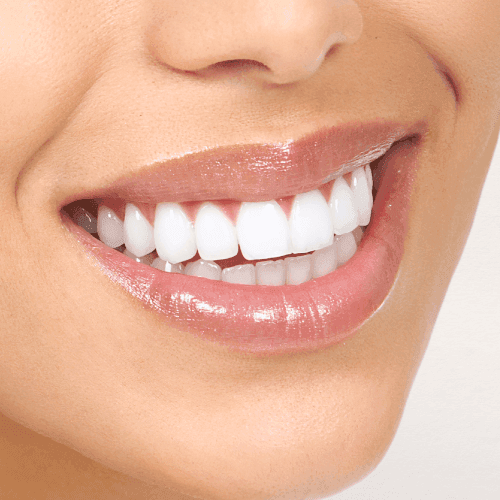
You can have a single veneer to fix one damaged tooth, or 16 to 20 veneers to transform your whole smile, often called a Hollywood Smile.
Turquiemed organizes your stay: forwarding your file to the dentist, opinion and detailed quote within 48 hours, airport pick-up, transfers, hotel, interpreter and 7-day-a-week assistance.
- Price per tooth in Turkey
- $115 to $520 depending on the material
- Materials
- Composite, porcelain, e.max, zirconia
- Tooth preparation
- Light, usually limited to the enamel
- Anaesthesia
- Local, if preparation is needed
- Stay
- 5 to 7 days (1 to 2 days for composite)
- Lifespan
- 10 to 20 years for porcelain, less for composite
How much do dental veneers cost in Turkey?
In Turkey, a dental veneer usually costs $115 to $230 in composite, $230 to $460 in porcelain and $290 to $520 in e.max porcelain, per tooth. With Turquiemed, veneers start from $115 per tooth. The final price depends on the material, the number of teeth and any treatment needed beforehand.
| Type of veneer | Price in Turkey |
|---|---|
| Composite (resin) | $115 to $230 |
| Porcelain (ceramic) | $230 to $460 |
| e.max porcelain (premium) | $290 to $520 |
| Zirconia | $230 to $330 |
These prices are indicative ranges observed at clinics. In Western Europe, the UK or the United States, a porcelain veneer often costs much more per tooth, and prices vary widely from one practice to another.
How much does a full smile cost?
To transform the whole smile, 8 to 10 veneers are usually placed per jaw, so 16 to 20 in total. With Turquiemed, the Hollywood Smile package starts from $3,700, including hotel, transfers and interpreter. For just a few teeth, the price is calculated per tooth.
What affects the price
- The material: composite is the cheapest, e.max porcelain the most expensive;
- The number of teeth to treat;
- Treatment needed beforehand: scale and polish, cavities, gum treatment, whitening of the other teeth;
- Smile design: digital simulation, resin mock-up;
- What the package includes: hotel, transfers, X-rays, interpreter.
Are veneers covered by insurance?
Usually not. Veneers are considered cosmetic, so public health insurance rarely covers them, whatever your country. Some private insurance policies include an allowance for cosmetic dental care: check your policy before you travel.
Your free quote is prepared after reviewing photos of your smile and, if possible, a recent panoramic X-ray. It specifies the number of teeth, the material and the type of treatment planned for each tooth.
Why choose Turkey for dental veneers?
Choosing Turkey for veneers means getting a new smile in a single 5 to 7 day stay, with a preview of the result, an on-site laboratory and prices often much lower than in Western Europe, the UK or the United States.
Cosmetic dental clinics in Turkey place veneers every day. The result, however, depends less on the country than on the clinic: respect for your natural teeth, quality of the porcelain and care taken in designing the smile.
1. An on-site dental laboratory
In many clinics, veneers are made by the clinic’s own laboratory within a few days. Try-ins are done during your stay, with adjustments possible before final bonding.
2. Digital smile design
Photos, digital impressions and simulation: you see the expected result before any preparation, and you approve the shape, length and shade of your future teeth.
3. Recognised porcelains
e.max porcelain (lithium disilicate) and zirconia are widely used. Your quote should state the material planned for each tooth.
4. A price known in advance
With Turquiemed, veneers start from $115 per tooth, and a full smile from $3,700 with the Hollywood Smile package. The price is set in a written quote before you travel.
5. A stay organised for you
Hotel, transfers between the airport, hotel and clinic, interpreter and 7-day-a-week assistance: you only need to focus on your smile. Istanbul has direct flights to many cities in Europe, the Gulf and the Middle East.
6. An honest treatment plan that preserves your teeth
A veneer only requires light enamel preparation: that is its whole point. Your treatment plan states, tooth by tooth, whether it is really a veneer or a crown, the planned material and how much of the tooth will be removed. Be wary of a quote that proposes crowns on healthy teeth: that is where “Turkey teeth” come from.
7. Support in English and follow-up after you return
You talk to Turquiemed in English from your very first message, and an interpreter accompanies you at the clinic: you can say clearly which shape and shade you want. Before you leave, the dentist checks your bite and gives you your treatment plan, with the material of each veneer.
Once home, you keep the same contact: you can ask your questions, and we liaise with the clinic. Your own dentist can carry out check-ups using these documents.
| In Turkey with Turquiemed | Often elsewhere | |
|---|---|---|
| First opinion | Within 48 hours, free, from photos | Waiting times vary by practice |
| Simulation | Digital simulation and mock-up in the mouth | Varies by practice |
| Number of trips | One, of 5 to 7 days | Several appointments over a few weeks |
| Price per veneer | From $115 | Often much higher in Western Europe, the UK or the US |
| Support | Hotel, transfers, interpreter, 7-day assistance | To organise yourself |
Who are dental veneers for?
Veneers suit adults whose front teeth are healthy but have a cosmetic flaw: colour, shape, size or small gaps. Teeth and gums must be healthy, or treated before the veneers are placed.
They can correct:
- stained teeth that do not whiten, for example after certain medicines or too much fluoride;
- chipped or worn teeth, or teeth with an irregular shape;
- teeth that are too small or of different sizes;
- small gaps between the teeth (diastema);
- slight misalignment, when orthodontic treatment is not wanted.
When veneers are not the right solution
- Teeth that are simply yellow: whitening is often enough, without touching the teeth.
- Badly misaligned teeth: orthodontic treatment, for example with aligners, is better, sometimes followed by a few veneers.
- Badly damaged or root-filled teeth: a crown is often stronger. See our dental prosthesis page.
- Missing teeth: they are replaced with dental implants, included in the treatment plan.
- Severe bruxism (clenching or grinding): it must be managed first, as it can break veneers.
Gum disease or cavities must be treated before placement. In young people, dentists usually wait until growth has finished, around 18.
Whitening, veneers or crowns: which to choose?
| Solution | What it corrects | What to know |
|---|---|---|
| Whitening | The colour of natural teeth | Does not touch the teeth; effect needs upkeep |
| Composite veneers | Small flaws in shape and colour | Little or no preparation; shorter lifespan |
| Porcelain veneers | Colour, shape, size, small gaps | Light enamel preparation; very durable |
| Crowns | Badly damaged or root-filled teeth | Tooth reduced all around, permanently |
Composite, porcelain, e.max or zirconia: which veneer to choose?
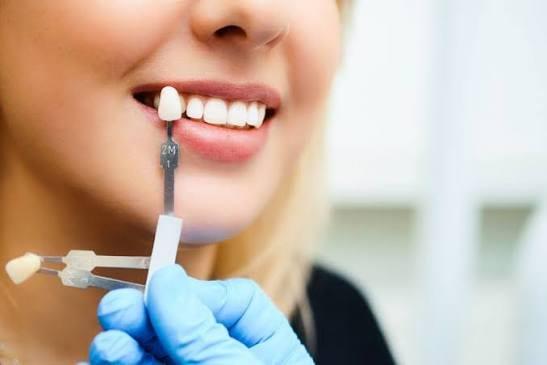
Porcelain, especially e.max, gives the most natural and longest-lasting result; composite costs less but wears and stains faster. The right choice depends on the condition of your teeth, the result you want and your budget.
| Composite | e.max porcelain | Zirconia | |
|---|---|---|---|
| What it is | Resin shaped directly on the tooth | Thin, translucent porcelain made in the laboratory | Very strong, more opaque ceramic |
| Tooth preparation | Little or none | Light, usually within the enamel | Often greater |
| Appearance | Good, stains over time | Very natural | Strong, slightly less luminous |
| Lifespan | Shorter | 10 to 20 years | Long |
| Price in Turkey | $115 to $230 | $290 to $520 | $230 to $330 |
Composite veneers
The dentist shapes a tinted resin directly on the tooth in one or two sessions. It is the cheapest and most reversible option, as the tooth is barely or not at all reduced. However, composite is less resistant, stains with coffee, tea or tobacco, and needs polishing or redoing more often.
Porcelain and e.max veneers
Made in the laboratory, they are bonded to the tooth after light enamel preparation, usually 0.3 to 0.7 mm. e.max porcelain (lithium disilicate) is thin and translucent and lets light through like a natural tooth: it is the reference material for cosmetic veneers. Porcelain does not turn yellow.
Zirconia veneers
Zirconia is very strong but more opaque than e.max. It is mostly used for crowns on badly damaged teeth. Be careful: a cheap offer of “zirconia veneers” sometimes hides crowns, which require reducing the whole tooth. Always ask exactly what is planned.
“No-prep” veneers
Some very thin veneers can be bonded with little or no reduction of the tooth. They mainly suit small or set-back teeth. On normal-sized teeth, they can make the teeth look too bulky: the dentist will tell you if they are possible in your case.
Veneers or crowns: how to avoid “Turkey teeth”?
To avoid “Turkey teeth”, ask in writing for the type of treatment planned for each tooth, veneer or crown, and how much of the tooth will be removed.
“Turkey teeth” refers to patients who expected veneers and went home with crowns on healthy teeth. A crown requires reducing the tooth all around, into a small stump. This is permanent: the tooth becomes weaker, sometimes sensitive, and may later need root canal treatment.
Good habits:
- ask for a written treatment plan, tooth by tooth;
- ask why a crown would be needed on a healthy tooth;
- be wary of a very low price for 20 “veneers” fitted in 2 or 3 days;
- ask for a simulation or a resin mock-up before any preparation.
How many veneers do you need?
Anything from a single veneer, to fix one tooth, to 16 to 20 veneers to redo the whole smile. The number depends on the flaw to correct and the width of your smile.
- 1 to 2 veneers: a broken, stained or smaller tooth. The challenge is matching the shade of the neighbouring teeth exactly.
- 4 to 6 veneers: the upper incisors and canines, to correct shape or gaps.
- 8 to 10 veneers per jaw: all the teeth visible when you smile. This is the principle of the Hollywood Smile.
If you only treat the upper teeth, the difference in shade with the lower teeth must be planned for, for example with whitening before placement.
How to choose the shade of your veneers?
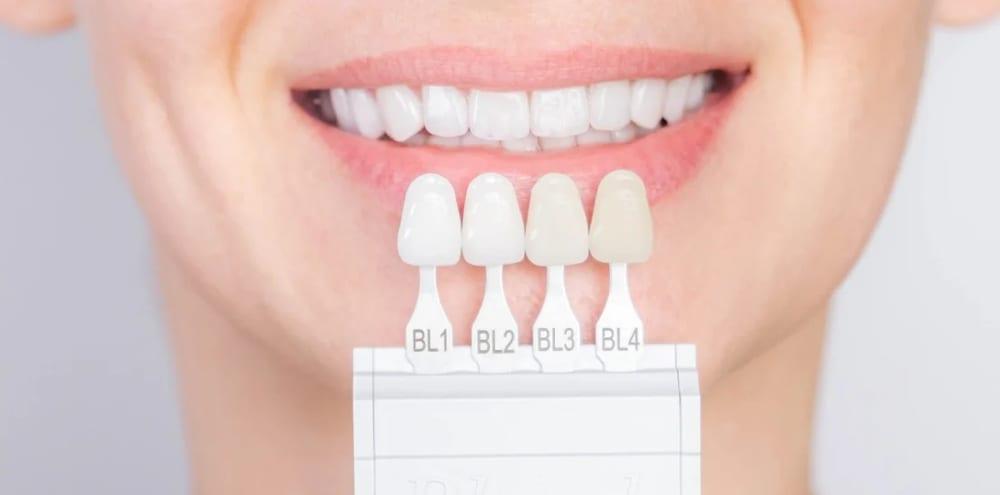
Choose a shade that matches your face, skin and other teeth, rather than the brightest white. Porcelain does not change colour: the shade you choose is permanent.
The dentist uses a shade guide, a set of colour samples, and shows you several shades in front of your smile. The whitest shades (often marked “BL”) are very bright: they look good in photos but can look artificial in everyday life, especially with untreated lower teeth.
- look at the try-ins in daylight, not only under the surgery lamp;
- if you want to whiten your natural teeth, do it before placement so the veneers match;
- a natural shape (slightly irregular edges, slight translucency) matters as much as colour.
How are veneers fitted in Turkey?
- You send us your request. Through the website form or on WhatsApp, with photos of your smile and, if possible, a recent panoramic X-ray.
- We look for the best option for your case and budget. We forward your file to the dentists at our partner dental clinics.
- You receive your treatment plan and quote. Within 48 hours: the number of veneers, the material, the length of stay and a detailed price, free and without obligation.
- We organise your trip. Clinic appointment, hotel, airport transfer and interpreter: everything is ready before you leave.
- We stay by your side until you return home. 7-day-a-week assistance during the stay, then regular check-ups, in Turkey or with your dentist.
Your 5 to 7 day stay, step by step
- Day 1: consultation and smile design. Examination of teeth and gums, X-ray, photos, digital simulation. Choice of shape and shade.
- Day 2: preparation. Any treatment needed (scale and polish, cavities), light enamel preparation under local anaesthesia, digital impression and temporary veneers.
- Days 3 to 4: fabrication and try-in. The laboratory makes the veneers. A try-in lets the dentist adjust shape and shade.
- Days 5 to 7: final bonding. The veneers are bonded one by one, then the bite is adjusted. A final check takes place before you return.
For composite veneers, everything can be done in 1 to 2 days, since the dentist shapes them directly on the teeth.
Sensitivity to hot and cold is common for a few days. Avoid biting very hard foods with your front teeth, and wear a night guard if you clench your teeth. After your return, a check-up with your dentist and a scale and polish every 6 months keep your teeth and implants healthy. Bring back the reports, X-rays and implant card.
How long do veneers last and how should you care for them?
Porcelain veneers last 10 to 20 years on average; composite veneers last less and need more upkeep. Lifespan depends mainly on your oral hygiene, your habits and the quality of the bonding.
Good daily habits
- gentle brushing twice a day with a low-abrasive toothpaste;
- floss or interdental brushes every day, to protect the gum at the edge of the veneers;
- a check-up and a scale and polish once or twice a year;
- a night guard if you clench or grind your teeth.
What to avoid
- biting very hard foods with your front teeth (ice, pits, bones);
- opening packaging with your teeth or biting your nails;
- tobacco, which stains the edges of the veneers and harms the gums;
- for composite: large amounts of coffee, tea and red wine, which stain it.
A veneer does not last forever: one day it will need to be replaced, at your own cost. Keep your treatment plan and the references of the materials, which will help your regular dentist.
What are the risks of dental veneers?
When well indicated and well placed, veneers give a long-lasting result; the most common problems are temporary sensitivity and a veneer coming off. Porcelain veneers are, however, irreversible: a prepared tooth will always need to be covered.
| Possible effect | Frequency | What to know |
|---|---|---|
| Sensitivity to hot and cold | Common at first | Fades within a few days to a few weeks |
| Veneer coming off | Uncommon | Usually re-bonded if intact |
| Cracked or broken veneer | Uncommon | Must be redone; more common with bruxism |
| Irritated gum at the edge of the veneer | Possible | Prevented by good hygiene and a well-fitted veneer |
| Shade or shape you don’t like | Possible | Hence the importance of the simulation and try-in |
How to choose your clinic and your quote?
A low price is not enough. Ask the hospital these questions before committing:
- Is the hospital authorized by the Turkish Ministry of Health to treat international patients?
- Who will perform the veneer treatment, and how experienced are they with this technique?
- Are these really veneers, not crowns, on each tooth, and how much of the tooth will be removed?
- Which material (composite, porcelain, e.max) and brand are planned for each tooth, and what guarantee is offered?
- Who takes care of a complication, on site and after your return home?
- What dental follow-up is planned, and with whom?
What a good quote should specify
- The name of the hospital and the doctor
- The tests, anesthesia, hospital stay and medication included
- The number of nights in hospital and at the hotel, and the transfers
- What happens in case of complication or cancellation
- The follow-up offered after your return
Also budget for your flight and follow-up consultations. Planned treatment in Turkey is usually not covered by public health insurance: ask your insurer in writing before committing.
Our partner hospitals in Turkey








Frequently asked questions about dental veneers in Turkey
How much does a dental veneer cost in Turkey?
Usually $115 to $230 in composite, $230 to $460 in porcelain and $290 to $520 in e.max porcelain, per tooth. With Turquiemed, veneers start from $115 per tooth; the exact price is on your free quote.
How much do 20 veneers cost in Turkey?
For a full smile of 16 to 20 veneers, Turquiemed’s Hollywood Smile package starts from $3,700, including hotel, transfers and interpreter. The final price depends on the material and the number of teeth.
Do teeth have to be filed down for veneers?
Usually a little: for porcelain veneers, a thin layer of enamel is removed, 0.3 to 0.7 mm. Composite veneers and some very thin veneers need little or no preparation.
What is the difference between a veneer and a crown?
A veneer only covers the front of the tooth, after light preparation. A crown covers the whole tooth, which must be reduced all around, permanently. On healthy teeth, a veneer is preferable.
How long do I need to stay in Turkey for veneers?
Usually 5 to 7 days for porcelain veneers: consultation, preparation, laboratory fabrication, try-in and bonding. For composite veneers, 1 to 2 days may be enough.
How long do dental veneers last?
On average 10 to 20 years for porcelain veneers, with good hygiene and regular check-ups. Composite veneers last less and need polishing or redoing more often.
Is getting veneers painful?
No, preparation is done under local anaesthesia when needed. Sensitivity to hot and cold is common for a few days, then usually disappears.
Composite or porcelain: which should I choose?
Porcelain, especially e.max, looks more natural, does not stain and lasts longer. Composite costs less and preserves more of the tooth, but stains and wears faster. It works well for small corrections.
Can I have just one veneer?
Yes, to fix a broken, stained or smaller tooth. The challenge is matching the shade of the neighbouring teeth exactly: a try-in before bonding is essential.
Can veneers be whitened?
No, porcelain keeps its colour. If you want to whiten your natural teeth, do it before placement so the veneers match.
Are dental veneers covered by insurance?
Usually not: they are cosmetic treatments, rarely covered by public health insurance. Some private policies include an allowance for cosmetic dental care.
What should I do if a veneer comes off?
Keep the veneer and contact a dentist: if it is intact, it can usually be re-bonded. If it is broken, it must be redone. The clinic’s guarantee should state how this is handled.
Request a free opinion and quote
Send us a recent panoramic X-ray, photos of your teeth and your medical history. The dentist will review them, and you will receive a detailed opinion and an estimated quote.
 Our advisors present the options suited to your case in Turkey