
Thyroid surgery in Turkey: price, stay and follow-up
Published on
General information: it does not replace a doctor’s advice.

Thyroid surgery (thyroidectomy) removes half or all of the gland, under general anesthesia, through a small incision in the neck. In Turkey, it usually costs $3,900 to $8,600, with 1 to 2 nights in hospital and a stay of about 5 to 7 days.
Do you have a nodule, a goiter or thyroid cancer, and has your doctor mentioned surgery? Thyroidectomy is a common operation, well mastered by teams who perform it often. In Turkey, it is carried out by experienced endocrine surgeons in modern hospitals that use, among other things, neuromonitoring of the voice nerves.
In this article, you will find when surgery is needed, how it is performed, its real risks, how long recovery takes and how your stay in Turkey is organized. If cancer has already been confirmed, also read our page on thyroid cancer treatment in Turkey.
Thyroid surgery at a glance
- Length of surgery
- 1 to 3 hours depending on the extent
- Anesthesia
- General
- Hospital stay
- Usually 1 to 2 nights
- Stay in Turkey
- 5 to 7 days
- Scar
- A few centimeters, in a natural neck crease
- Back to work
- Usually 2 to 3 weeks for office work
- After surgery
- Lifelong levothyroxine if the whole thyroid is removed
- Price in Turkey
- $3,900 to $8,600, on quote
When does the thyroid need surgery?
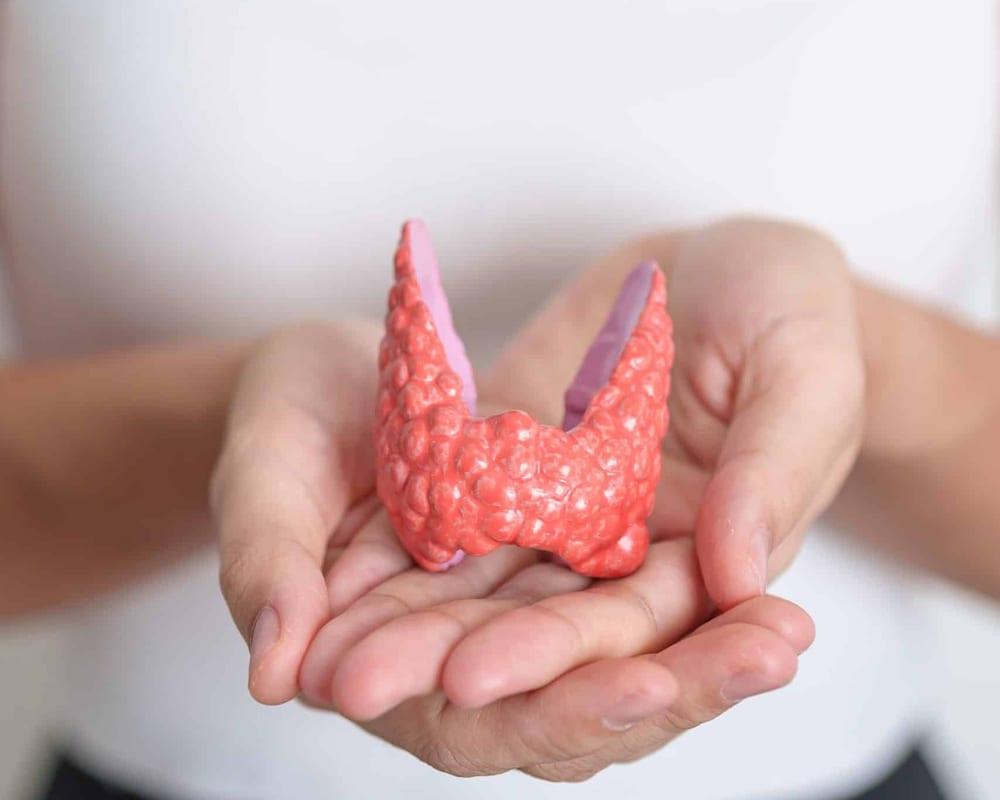
The thyroid is operated on in four main situations: a suspicious or bothersome nodule, a large goiter, an overactive thyroid that medication does not control, or cancer. Most thyroid conditions are treated without surgery, with medication or simple monitoring.
The thyroid produces the hormones T3 and T4, which regulate metabolism, heart rate and body temperature.
Thyroid nodules
Nodules are very common: an ultrasound finds them in a large share of adults, especially women and older people. The good news: more than 9 out of 10 nodules are not cancer. Surgery may be proposed if the nodule:
- looks suspicious on ultrasound or fine-needle aspiration;
- keeps growing between check-ups;
- makes swallowing or breathing difficult;
- produces too much hormone (a “toxic” nodule).
Goiter
A goiter is an enlarged thyroid. When it becomes large, it can press on the windpipe or the esophagus. Surgery is then considered, especially if it extends behind the breastbone.
Hyperthyroidism
In Graves’ disease or some toxic goiters, the thyroid produces too much hormone. Surgery is an option when medication is not enough, causes side effects or when the disease comes back. Radioactive iodine is the other alternative.
Thyroid cancer
Thyroid cancer usually has a good prognosis and most often appears as a nodule. Surgery is the main treatment, sometimes followed by radioactive iodine: everything is explained on our page on thyroid cancer in Turkey.
Which tests should you send before surgery?
A first opinion usually requires three tests: a blood test with TSH, a recent neck ultrasound and, for a nodule, the fine-needle aspiration result. They show whether surgery is needed and which operation to perform.
The blood test (TSH)
TSH shows whether the thyroid is working normally. A low TSH suggests an overactive thyroid (hyperthyroidism), a high TSH an underactive one (hypothyroidism). Depending on the case, the doctor also checks T3 and T4, Graves’ disease antibodies, calcium and sometimes calcitonin.
The neck ultrasound
It measures the thyroid and each nodule and describes their appearance. In Europe, the result is often given as an EU-TIRADS score, from 1 to 5 (TI-RADS in other countries): the higher the score, the more closely the nodule should be checked. The ultrasound also examines the neck lymph nodes. To compare changes, send your previous ultrasounds if you can.
Fine-needle aspiration
A very fine needle collects a few cells from the nodule, guided by ultrasound. The test is quick and causes little pain. The result is graded from I to VI using the international Bethesda system:
| Bethesda category | What it means | Usual next step |
|---|---|---|
| I | Sample not sufficient | Repeat aspiration |
| II | Benign | Monitoring, unless the nodule is bothersome |
| III and IV | Indeterminate | New check or lobectomy to obtain a definite diagnosis |
| V and VI | Suspicious or cancer | Surgery in most cases |
Other useful documents
- a scintigraphy, if one was done for a nodule producing too much hormone;
- a CT scan of the neck and chest for a goiter extending behind the breastbone;
- your medical history, current treatments and any allergies.
With a complete file, the surgeon can usually give a first opinion quickly, without you having to travel. If a test is missing, it can also be done on site the day before surgery.
Can thyroid surgery be avoided?
Yes, often. Surgery is only one of the options: depending on the condition, simple monitoring, medication, radioactive iodine or radiofrequency ablation may be enough.
Monitoring
A benign nodule that causes no discomfort and does not grow usually does not need surgery. A follow-up ultrasound, first after about a year and then less often, is usually enough. For some very small cancers under one centimeter with no worrying signs, active surveillance may also be offered by specialized teams.
Medication
In Graves’ disease, treatment starts with antithyroid drugs, usually taken for 12 to 18 months. Some patients are cured this way. Surgery is mainly considered if the disease returns when treatment stops or if the drugs are poorly tolerated.
Radioactive iodine
A radioactive iodine capsule gradually destroys the part of the thyroid that produces too much hormone. It is an alternative to surgery for Graves’ disease and toxic nodules. It cannot be used during pregnancy or breastfeeding, and it is not always advised when the eyes are affected.
Radiofrequency ablation
For a benign nodule confirmed by aspiration but bothersome (difficulty swallowing, visible nodule), radiofrequency ablation is a scar-free option recognized by the European Thyroid Association guidelines: a needle heats the nodule so that it shrinks over the following months. It is done under local anesthesia, without a hospital stay, and preserves the thyroid. It is not suitable for suspicious nodules or large goiters.
| Situation | Non-surgical options | When surgery is preferred |
|---|---|---|
| Benign nodule causing no discomfort | Monitoring | Rarely |
| Bothersome benign nodule | Radiofrequency ablation | Very large nodule or many nodules |
| Graves’ disease | Medication, radioactive iodine | Relapse, large goiter, eye involvement, planned pregnancy |
| Large goiter | Monitoring if it causes no discomfort | Pressure on the windpipe or esophagus |
| Suspicious nodule or cancer | Active surveillance for some very small cancers | In the vast majority of cases |
The choice is made with your doctor and the surgeon, based on your work-up. At Turquiemed, if the surgeon believes a non-surgical option suits you better, they will tell you before any travel.
How is thyroid surgery performed?
The operation is done under general anesthesia. The surgeon makes a small horizontal incision in a natural crease of the neck, so the scar is as discreet as possible.
The two types of operation
| Operation | What is removed | Common indications | After surgery |
|---|---|---|---|
| Lobectomy (hemithyroidectomy) | One lobe | Benign or suspicious nodule on one side, some small cancers | The remaining lobe often produces enough hormone |
| Total thyroidectomy | The whole gland | Cancer, goiter on both sides, Graves’ disease | Daily lifelong hormone treatment (levothyroxine) |
In case of cancer, the surgeon may also remove some neck lymph nodes (lymph node dissection).
How long does the operation take?
Usually 1 to 3 hours, depending on the extent of the surgery, the size of the thyroid and any lymph node dissection.
How many days in hospital?
The hospital stay is short. In some countries, the operation is done as day surgery or with a single night in hospital. In Turkey, hospitals often keep patients from abroad for 1 to 2 nights, as a precaution, because they then go back to a hotel.
What are the risks of thyroid surgery?
Like any surgery, thyroidectomy carries risks. According to a review published in the Journal of Visceral Surgery (2013), the two most common complications right after surgery are:
- Low calcium (hypocalcemia): it affects 20 to 30% of patients after a total thyroidectomy. It comes from the parathyroid glands, attached to the thyroid. It is most often temporary and treated with calcium and vitamin D.
- Voice nerve injury (recurrent laryngeal nerve): it causes a hoarse voice in 5 to 11% of patients right after surgery. In the vast majority of cases, the voice returns within a few weeks to a few months. Permanent damage is rare.
More rarely, bleeding can form in the neck (hematoma). It mostly appears in the first hours: that is why monitoring in hospital is essential.
The surgeon’s experience matters a lot. Ask how many thyroidectomies they perform each year and whether they use neuromonitoring, a device that helps locate and protect the voice nerve during surgery.
Recovery and follow-up after surgery
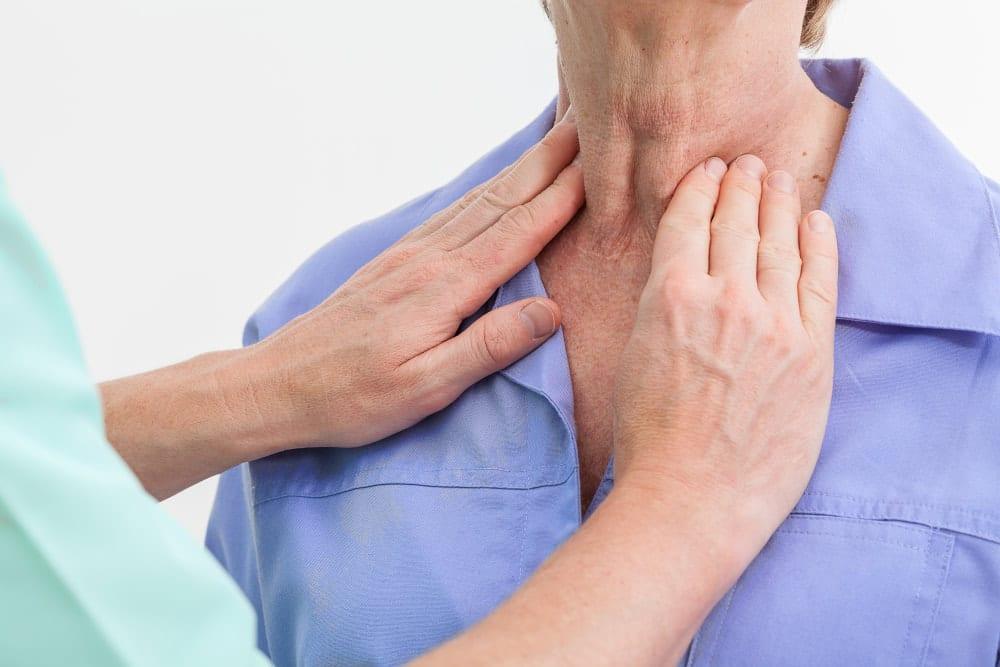
The first days
The neck is a little sore and stiff, and it is normal to have some difficulty swallowing for a few days. Standard painkillers are usually enough. You can drink the evening after surgery and eat the next day, preferring soft foods at first.
When can you go back to work?
It depends on the operation and your job. As a guide, plan on 2 to 3 weeks for office work and 3 to 4 weeks for physical work, a little less after a lobectomy. Voice-intensive jobs (teachers, singers, call center staff) may need longer. Only your doctor decides on the right length of sick leave.
Hormone treatment
After a total thyroidectomy, you will take a levothyroxine tablet every morning to replace the hormone the thyroid no longer produces. This treatment is simple, well tolerated and allows a normal life. The dose is adjusted with a blood test (TSH) about 6 weeks after surgery.
Follow-up back home
Follow-up takes place with your family doctor or endocrinologist:
- TSH and calcium tests;
- reading the pathology result (the analysis of the removed thyroid);
- in case of cancer, specific follow-up and sometimes radioactive iodine.
Before leaving Turkey, ask for the operative report and your results: your doctor can then take over without delay.
Having thyroid surgery in Turkey
Why choose Turkey?
- Experienced surgeons: large Turkish hospitals have endocrine surgery departments that operate on the thyroid very regularly.
- Modern hospitals: many Turkish hospitals are accredited by Joint Commission International (JCI), an international quality and patient safety label.
- Advanced technology: voice nerve neuromonitoring, on-site ultrasound and aspiration, fast analysis of samples.
- Short waiting times: once your file is approved, a surgery date is often available within a few weeks.
How much does a thyroidectomy cost in Turkey?
A thyroidectomy usually costs $3,900 to $8,600 in Turkey. The price depends on the type of operation (lobectomy or total thyroidectomy), any lymph node dissection and the hospital chosen.
| Care | Indicative price in Turkey |
|---|---|
| Assessment (consultation, ultrasound, tests, aspiration if needed) | $350 to $1,050 |
| Thyroidectomy (lobectomy or total) | $3,900 to $8,600 |
| Total thyroidectomy with lymph node dissection | On quote |
The quote usually includes the consultation with the surgeon, pre-operative tests, anesthesia, the operation, the hospital stay, analysis of the removed thyroid, transfers and an interpreter. Your detailed quote is sent after your file has been reviewed.
How many days should you stay in Turkey?
We recommend a stay of 5 to 7 days, for example:
- Day 1: arrival, consultation with the surgeon, blood tests and ultrasound.
- Day 2: surgery.
- Days 3 to 4: discharge from hospital, rest at the hotel.
- Days 5 to 6: follow-up visit (scar, voice, calcium).
- Day 6 or 7: flight home, with the surgeon’s approval.
This allows you to get through the period when most complications appear, with the medical team close by.
What about insurance?
Planned treatment in Turkey is usually not covered by public health insurance systems, which generally only reimburse urgent care abroad. Some private insurers and international health plans do cover treatment abroad: ask your insurer in writing before you commit.
How Turquiemed supports you
- You send your tests (blood test, ultrasound, aspiration).
- A surgeon reviews your file and proposes a treatment plan.
- You receive a detailed written quote.
- We organize your stay: hospital, hotel, transfers, interpreter.
- Our team supports you 7 days a week until you return home.
- You go home with your reports for your doctor.
Turquiemed is a support and organization service. Diagnoses and treatment decisions are made solely by doctors.
Would you like an opinion on thyroid surgery? Send us your file for a free medical opinion.
Sources
- Christou N, Mathonnet M. Complications after total thyroidectomy. Journal of Visceral Surgery, 2013 (low calcium, voice nerve)
- The 2023 Bethesda System for Reporting Thyroid Cytopathology. Thyroid, 2023 (aspiration results)
- European Thyroid Association Guidelines: the EU-TIRADS. European Thyroid Journal, 2017 (ultrasound score)
- 2020 European Thyroid Association Clinical Practice Guideline for the Use of Image-Guided Ablation in Benign Thyroid Nodules. European Thyroid Journal, 2020 (radiofrequency ablation)
- Joint Commission International (hospital accreditation)
Links checked on 16 November 2026.
Frequently asked questions
Is thyroid surgery dangerous?
No, it is a common and well-mastered operation. The most frequent complications (low calcium, hoarse voice) are most often temporary. Choosing an experienced surgeon reduces the risks.
How much does thyroid surgery cost in Turkey?
Usually $3,900 to $8,600, depending on the type of operation (lobectomy or total thyroidectomy), any lymph node dissection and the hospital. The exact price is on your free quote, prepared after reviewing your file.
Will the scar be visible?
Only slightly: the incision is a few centimeters long and follows a natural crease of the neck. It usually fades within a few months. Protect it from the sun during the first year.
Will I gain weight after surgery?
No, if your hormone treatment is properly dosed: the operation itself does not cause weight gain. That is why follow-up blood tests matter.
Will I need lifelong treatment?
Yes after a total thyroidectomy: one levothyroxine tablet a day. After a lobectomy, it is often not necessary.
When can I fly home?
Usually a few days after surgery, after the follow-up visit and with the surgeon’s approval. That is why we recommend a 5 to 7 day stay.
Can my nodule be treated without surgery?
Sometimes. Many benign nodules are simply monitored. Some can also be treated with radiofrequency ablation, a scar-free technique. The surgeon will tell you which option suits your case.
Request a free medical opinion
Send us your blood test, your neck ultrasound and, if done, your aspiration result: a surgeon reviews your file, and you receive an opinion and a detailed quote, free of charge and without obligation.
 Our advisors present the options suited to your case in Turkey